




Embraer Showcases the Ipanema 203 for the First Time at Exposición Rural in Argentina
Embraer will join industry leaders to discuss the future of smart aerial application and emerging agricultural technologies
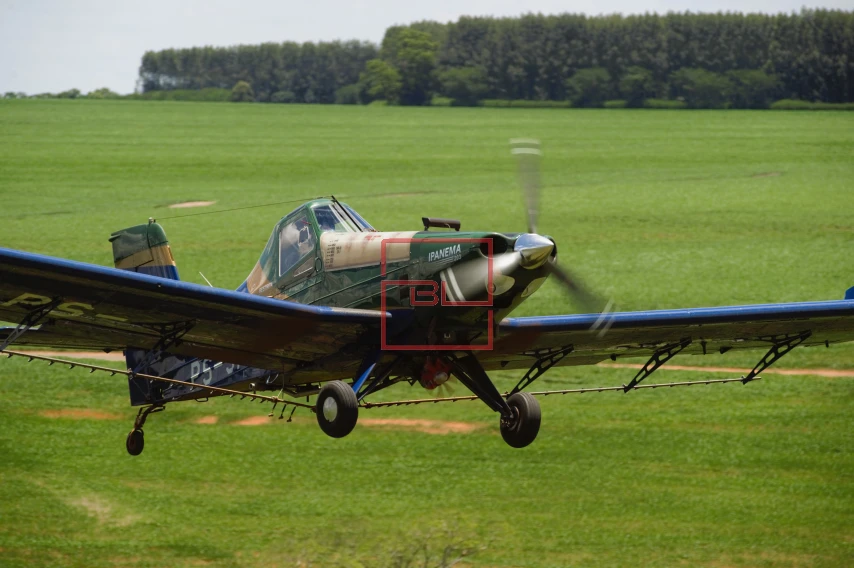
Embraer (NYSE: EMBJ; B3: EMBJ3) will participate for the first time in the 138th Exposición Rural, one of the most traditional and important agribusiness events in Latin America, taking place from July 16 to 26 in Buenos Aires, Argentina. The initiative is part of the company’s strategy to expand the international presence of the Ipanema 203, Brazil’s market-leading cropduster and the world’s only ethanol-powered agricultural airplane, while strengthening its footprint in new markets across the region.
During the event, Embraer has been invited to join a panel bringing together industry leaders to discuss the future of smart aerial application, new technologies, and innovative initiatives aimed at increasing agricultural productivity. “We are honoured to participate, for the first time, in one of Latin America’s premier agribusiness events. The exhibition provides an excellent opportunity to introduce the Ipanema 203 to Argentine operators, aerial application companies, and farmers, while reinforcing our expansion strategy in key markets for the development of regional agricultural aviation,” said Sany Onofre, Embraer’s Agricultural Aviation Leader.
Embraer has recently advanced its expansion strategy in Argentina by signing a Memorandum of Understanding (MoU) with Essential Energy Holding, a leader in energy-efficiency solutions, and Bioenergías Agropecuaria, the group’s biofuel production company. The agreement will support feasibility studies on ethanol production and distribution for future Ipanema operators. On a regional perspective, Embraer also announced the certification of the Ipanema 203 in Paraguay, a milestone that paves the way for the aircraft’s large-scale operations in the country.
With more than 1,700 aircraft delivered, the Ipanema is the segment sales leader in Brazil and the preferred choice of operators due to its low operating costs, high productivity, and exceptional application precision. Powered by ethanol, the Ipanema 203 delivers both sustainability and operational efficiency, achieving performance equivalent to four large ground sprayers operating simultaneously and capable of spraying more than 200 hectares per hour.
In addition to providing uniform, high-quality application, the aircraft eliminates issues such as crop damage caused by ground equipment and the spread of pests through soil contact, among numerous other advantages. As a result, it can deliver yields of up to 15 bags per hectare, depending on the crop type and operating conditions.
Comments